
Why Wyoming
Jurisdiction plays a meaningful role in asset protection planning. While no state can eliminate risk entirely, certain legal environments provide clearer statutory frameworks that support thoughtful, proactive structures leading to more robust protections and more predictable planning.
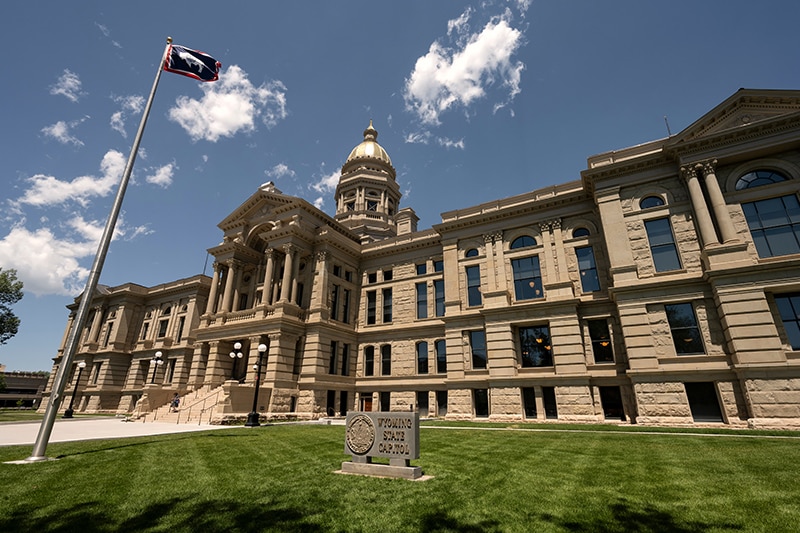
Wyoming has emerged as one of the country’s most respected jurisdictions for modern asset protection planning. Its statutes governing trusts, limited liability companies, and privacy reflect a legislative intent to provide predictability — an important consideration for advisors and clients seeking durable legal strategies.
Understanding both the advantages and the limitations of the jurisdiction is essential before implementing any structure.
A Statutory Framework Designed for Structural Clarity
Why Wyoming Is Used for Asset Protection
Wyoming’s asset protection reputation is largely rooted in its legislative approach. Over time, the state has developed laws intended to provide consistency in how certain entities and trusts are administered and evaluated.
For advisors and clients alike, predictability within a legal framework can help reduce uncertainty when designing long-term planning strategies.
Wyoming is often considered when planning calls for:
- clearly defined creditor remedies
- modern trust statutes
- strong LLC protections
- enhanced privacy provisions
- administrative flexibility
These characteristics contribute to a jurisdiction frequently associated with disciplined structural planning rather than reactive solutions.

Modern Trust Law With Defined Parameters
Statutory Trust Advantages
Wyoming is among the states that permit self-settled asset protection trusts under specific statutory guidelines. When properly established and administered, these trusts may help define how and when creditors can pursue trust assets.
Key statutory considerations often include:
- defined limitation periods for certain creditor claims
- requirements surrounding solvency and intent
- independent trustee oversight
- adherence to formal trust administration
These trusts do not render assets unreachable, nor do they override lawful court authority. Instead, they provide a legal structure that, when respected, may strengthen a client’s overall risk management posture.
Suitability and timing remain central to their effectiveness.
Limiting Creditor Remedies
Charging Order Protection for LLCs
Wyoming is widely recognized for its charging order statutes, which may restrict a creditor’s ability to access underlying assets held within a limited liability company.
In many cases, a creditor may be limited to a charging order — a remedy that provides rights to distributions without granting management control or forcing liquidation of company assets.
This legal separation can help preserve operational continuity while supporting broader asset protection objectives.
As with any entity strategy, proper formation and ongoing administration are critical to maintaining these protections.
Reducing Unnecessary Public Visibility
Privacy Protections in Wyoming Law
Wyoming law allows for entity structures that may require less publicly accessible ownership information than some other jurisdictions. When implemented appropriately, this can help limit the amount of personal financial data available through routine public searches.
Privacy should not be mistaken for secrecy. Courts retain authority, and lawful disclosure remains possible when legally compelled.
However, reducing unnecessary visibility may discourage speculative claims driven primarily by assumptions about accessible wealth.
For many clients, privacy functions as a structural safeguard rather than a defensive tactic.


A Stable Environment for Trust Oversight
Trustee-Friendly Administration
Effective trust planning depends not only on statutory language but also on the administrative environment in which a trust operates.
Wyoming is often viewed as trustee-friendly due to:
- clear statutory guidance
- flexible administrative provisions
- recognition of directed trusts
- an established framework for trust governance
This environment can support trustees in carrying out fiduciary responsibilities with greater clarity, which in turn benefits both advisors and clients relying on consistent administration.
Strong structures are reinforced by stable oversight.
Evaluating Jurisdictional Alignment
Why Some Clients Consider Moving Assets to Wyoming
Not every client requires a Wyoming structure, and relocation is not universally necessary. However, some individuals explore Wyoming planning when their existing jurisdiction presents limitations or when their risk profile has evolved.
The decision should always follow careful legal evaluation rather than assumption.
Residency vs. Trust Situs
A common misconception is that a client must reside in Wyoming to benefit from its trust statutes. In many cases, the governing law of the trust — often referred to as its situs — is the more relevant factor.
Establishing a Wyoming situs typically involves:
- a qualified Wyoming trustee
- administration within the state
- compliance with statutory requirements
Residency may influence certain planning considerations, but it is not always determinative.
When Relocation May Matter
Relocation can become relevant when:
- state income tax exposure is a concern
- a client seeks broader jurisdictional alignment
- trust administration would benefit from geographic consistency
- long-term planning objectives favor a single legal environment
Such decisions should be evaluated in coordination with tax and advisory professionals.
When It Does Not
In many scenarios, clients can utilize Wyoming structures without changing their primary residence. Proper trust design and administration often carry greater weight than geography alone.
Careful analysis helps prevent unnecessary disruption while preserving planning effectiveness.
Grounding Planning in Legal Reality
Common Misconceptions Advisors Should Help Correct
Asset protection conversations sometimes begin with assumptions that can lead to poorly designed strategies. Advisors play an important role in reinforcing accurate expectations.
Common misconceptions include:
- that asset protection makes wealth invisible
- that structures can defeat any creditor
- that planning is effective even after liability emerges
- that all jurisdictions provide comparable protections
- that entities require little ongoing administration
Responsible planning replaces these assumptions with statutory understanding and disciplined execution.
Clarity at the outset often determines the durability of the structure.

Determine Whether Wyoming Planning Is Appropriate
Whether you are an advisor evaluating jurisdictional strategy for a client or an individual exploring proactive legal planning, a thoughtful conversation is the first step.